
콩칵
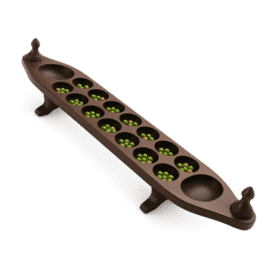 콩칵 혹은 성카, 총카라고도 불리는 이 게임은 15세기 만칼라에서 유래된 것으로 추정되는 씨뿌리기 게임입니다.
대부분의 콩깍(Congkak)이나 숭카(Sungka) 보드는 양쪽에 각각 7개의 구덩이가 있고, 보드의 양 끝에는 각 플레이어를 위한 저장소가 하나씩 있습니다. 그러나 일부 보드는 구덩이의 수가 더 많거나 더 적을 수도 있습니다. 보드의 각 한쪽은 한 명의 플레이어에게 속합니다. 보드는 보통 나무로 만들어지며 다양한 무늬로 조각되어 있습니다. 씨앗은 주로 카우리 조개를 사용하지만, 다른 물건을 사용할 수도 있습니다.
이 게임은 만칼라와 비슷하게 진행되지만 몇 가지 중요한 차이점이 있습니다. 게임의 목표는 가장 많은 씨앗을 얻는 것입니다. 게임은 각 구덩이에 7개의 씨앗이 들어 있는 상태로 시작합니다. 플레이어는 자신의 저장소(스토어하우스)에 씨앗을 넣어 점수를 얻습니다. 두 플레이어는 동시에 첫 턴을 시작합니다. 플레이어의 턴 동안, 자신의 보드 쪽에 있는 한 구덩이의 씨앗을 모두 집어 들고 시계 방향으로 한 구덩이씩 씨앗을 떨어뜨립니다. 이때 자신의 저장소에는 씨앗을 넣지만, 상대방의 저장소는 건너뜁니다. 만약 마지막 씨앗이 이미 씨앗이 들어 있는 구덩이에 떨어지면, 그 구덩이에 있는 씨앗을 모두 집어 다시 한 바퀴를 돌며 계속 분배합니다. 만약 마지막 씨앗이 자신의 보드 쪽의 비어 있는 구덩이에 떨어지면, 그 구덩이에 놓은 씨앗과 함께 보드 반대편에 대응되는 상대방 구덩이에 있는 모든 씨앗을 획득합니다. 씨앗이 어느 쪽이든 비어 있는 구덩이에 떨어지면 그 즉시 해당 플레이어의 턴은 종료됩니다. 한쪽 보드의 모든 구덩이가 비면 게임이 끝납니다. 만약 다른 한쪽 보드에 씨앗이 남아 있다면, 그 보드를 소유한 플레이어가 남아 있는 씨앗을 모두 가져갑니다.
게임은 여러 라운드로 진행할 수도 있습니다. 한 라운드가 끝나면 각 플레이어는 자신의 저장소에 있던 씨앗을 사용해 자신의 보드 쪽 각 구덩이를 다시 채웁니다. 초기 설정과 마찬가지로 각 구덩이에는 7개의 씨앗이 들어갑니다. 남은 씨앗은 저장소에 그대로 유지됩니다. 만약 어떤 구덩이를 7개의 씨앗으로 채울 만큼 씨앗이 부족하다면, 그 구덩이는 불타 없어졌다고 간주되어 게임에서 제거됩니다. 플레이어는 불타 없어진 구덩이에 씨앗을 놓을 수 없습니다. 이러한 라운드의 연속은 한 플레이어가 더 이상 어떤 구덩이도 7개의 씨앗으로 충분히 채울 수 없게 되면 종료됩니다.
플레이어 수: 2
게임 시간: 10 mn
복잡성: 1 / 5
콩칵 및 다른 게임 1414개를 온라인으로 즐겨보세요.
다운로드가 필요없으며, 웹 브라우저에서 바로 플레이할 수 있습니다.
친구들과 그리고 전세계의 수많은 게이머들과.
무료.

콩칵 및 다른 게임 1414개를 온라인으로 즐겨보세요.
다운로드가 필요없으며, 웹 브라우저에서 바로 플레이할 수 있습니다.
친구들과 그리고 전세계의 수많은 게이머들과.
무료.
규칙 요약
OVERVIEW
Congkak is a 2-player mancala style game. The board has 2 large grooves on its left and right ends (storehouses), with 14 small holes in between (7 on each side). The game begins with 7 stones in each of the small holes and nothing in the storehouses. The storehouse to your left is yours, as are the 7 small holes nearest to you. Your goal is to have the most stones in your storehouse at the end of the game.
HOW TO PLAY
FIRST ROUND ONLY:
Each player chooses a hole on their own side of the board. The stones from these holes are SIMULTANEOUSLY redistributed around the board by placing one stone in each hole CLOCKWISE until all stones have been distributed. You will place a stone in your storehouse, in passing, but never in the opponent's storehouse.
Depending on where your last stone is placed, take the following actions:
1 - YOUR OWN STOREHOUSE: at the end of the board: Choose any hole on your side of the board, scoop up all of its stones, and again redistribute them around the board.
2 - ANY OCCUPIED HOLE: Regardless of which side of the board you end, if there are stones in that hole, scoop them all up, and again redistribute them around the board.
3 - EMPTY HOLE ON YOUR SIDE: Scoop up all of the stones on the opposite side of the board and place them into your storehouse. Your turn is over.
4 - EMPTY HOLE ON THEIR SIDE: Your turn is over.
SUBSEQUENT ROUNDS:
The player who finished their opening moves first will play first after their opponent is done. Then turns alternate between players. Only the first round is simultaneous.
GAME END
Play until all of the small holes on ONE side of the board are empty, but be careful: all remaining stones go into their owner's storehouse!
MULTIPLE ROUND OPTION
If playing more than one round, you will use the stones in your storehouses to reseed your side of the board. Distribute the stones evenly amongst the holes, up to 7 stones per hole.
~ Any stones left over go back into your storehouse. ~ If you don't have enough stones to fill a hole (it is empty), it is considered "burnt" and anyone's pieces that land in it automatically go to their opponent!
The loser of the previous round goes first. There is no simultaneous opening move.
Game ends when all of the houses are empty on either side of the board. Player with the most stones wins.