
나이롱뽕
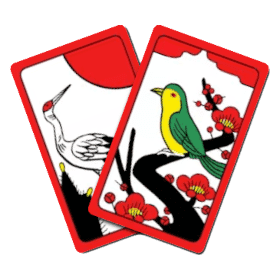 나이롱뽕은 다른 여러 투전 게임에 마작의 일부 요소를 섞은 한국의 러미 계열 전통 화투 게임입니다.
화투 이미지와 하나후다 이미지는 각각 CC BY-SA 4.0 규약에 호환되는 프리 아트 라이선스 1.3 규약에 따라 이용한 Marcus Richert와 Louie Mantia Jr.의 저작물입니다.
화투 효과음 일부는 공공누리 제1유형 규약에 따라 이용한 전주정보문화산업진흥원의 저작물입니다.
플레이어 수: 2 - 6
게임 시간: 12 mn
복잡성: 1 / 5
나이롱뽕 및 다른 게임 1370개를 온라인으로 즐겨보세요.
다운로드가 필요없으며, 웹 브라우저에서 바로 플레이할 수 있습니다.
친구들과 그리고 전세계의 수많은 게이머들과.
무료.

나이롱뽕 및 다른 게임 1370개를 온라인으로 즐겨보세요.
다운로드가 필요없으며, 웹 브라우저에서 바로 플레이할 수 있습니다.
친구들과 그리고 전세계의 수많은 게이머들과.
무료.
규칙 요약
Nylon-ppong
Nylon-ppong (or Nairong-ppong) is a traditional Korean Hwatu rummy game for 2 to 6 players. It combines elements of Mahjong with traditional rummy mechanics.
Gameplay Flow
The game is played with a standard 48-card Hwatu deck (12 months, 4 cards each). Players must be familiar with the Korean month sequence (1 to 12) to calculate scores and sequences.
A round proceeds counterclockwise. On their turn, a player follows these steps:
- Draw: Draw one card from the face-down draw deck.
- Check: If the resulting 6 cards in hand form a valid combination, the player may end the round immediately.
- Discard: If no combination is formed, the player must discard one card to the pile to end their turn.
The round ends if the draw deck runs out of cards, a player "goes out" via a special action, or a player calls a 6-card combination.
Special Actions
Ppong (or Pong)
If a player holds two cards of the same month as the card just discarded to the top of the pile, they can call "Ppong".
- This can often be done out of turn.
- The player discards the matching pair from their hand.
- They must then discard one additional card to end their turn.
- If a player has no cards left after the final discard, they have gone out, and the round ends immediately.
Stop
A player who has only 2 cards remaining in their hand (after having called at least one "Ppong") can choose to call "Stop" instead of drawing a card.
- This is only allowed if the sum of the month numbers of their two cards is equal to or less than a predetermined limit (usually 5 or 10).
- Calling "Stop" ends the round immediately.
Combinations (6-Card Hands)
If a player ends the round by claiming one of these combinations, they ignore standard penalty points and instead receive the combination's value (which can be a negative number, reducing their total penalty score).
| Name | Value | Composition |
|---|---|---|
| Three pairs (Ddoi-ddoi) | 0 | Three pairs from three different months. |
| Two triplets (Ddoi-ddoi) | 0 | Two triplets from two different months. |
| Four and pair (Nejang-ddoi) | -50 | A four-of-a-kind and a pair of another month. |
| Straight | -Sum | 6 cards of consecutive months (e.g., months 3-8). |
| 10 or less (Sib-bujok) | -100 | 6 cards with a total sum of 10 or less. |
| 66 or more (Daeppang) | -100 | 6 cards with a total sum of 66 or more. |
Scoring and Penalties
At the end of a round, players typically receive penalty points equal to the sum of the month numbers of the cards remaining in their hand.
- Failed Stop: If a player calls "Stop" but another player has a lower (or equal) hand sum, the caller receives an additional 30 or 50 penalty points.
- Ppong Victim: If a player discards a card that allows another player to go out by calling "Ppong," the discarder receives an additional 30 or 50 penalty points.
- Starting Player: The player with the most penalty points from the previous round becomes the starting player for the next round.
Winning the Game
The game consists of a predetermined number of rounds. The player with the lowest total penalty points at the end is the winner.